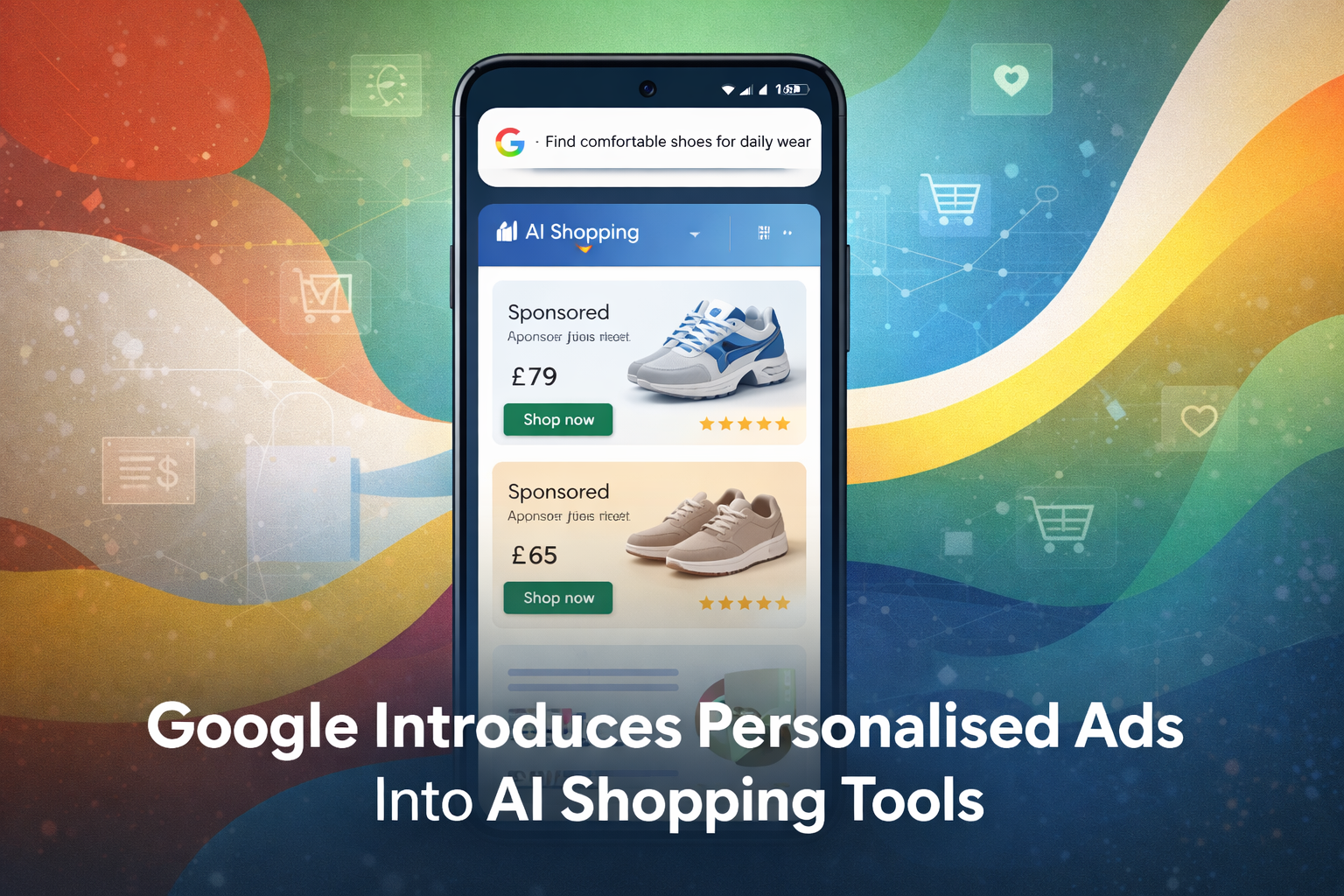
Google Introduces Personalised Ads Into AI Shopping Tools and Changes How We Buy Online
Google has taken another major step in the evolution of online shopping by introducing personalised ads into its AI powered shopping tools. This move blends artificial intelligence with targeted advertising, creating a more customised experience for users while opening new commercial opportunities for retailers and brands.
As more people rely on AI mode search and smart shopping assistants to compare prices, discover products and make purchasing decisions, Google is positioning its platform at the centre of the digital buying journey.
What AI Mode Shopping Means for Users
AI mode shopping allows users to search for products using natural language. Instead of typing short keywords, people can ask detailed questions such as what laptop suits remote work or which trainers are best for running in winter.
The system analyses browsing history, preferences, location and previous searches to generate tailored recommendations. With personalised ads now added, promoted products appear directly within these AI generated suggestions. This creates a shopping experience that feels more relevant and faster for the user.
How Personalised Ads Are Integrated
Rather than traditional banner adverts or sponsored links, the ads are embedded naturally into AI responses. A user asking for a product recommendation may see sponsored items presented alongside organic suggestions, which are aligned with their interests and buying behaviour.
Google’s AI engine evaluates intent, price sensitivity and product popularity to decide which ads appear. This reduces irrelevant advertising and improves conversion potential for businesses.
Why Google Is Making This Move
Online shopping behaviour is shifting rapidly. Users expect personalised experiences and instant answers. Traditional search ads are becoming less effective as AI powered tools take over discovery.
By integrating personalised advertising into AI shopping tools, Google protects its advertising revenue while modernising how brands reach customers. This also strengthens Google’s position against emerging AI driven marketplaces and retail platforms.
Impact on Retailers and Advertisers
For businesses, this creates new opportunities but also new competition. Brands must optimise product data, pricing strategies and customer targeting to remain visible inside AI driven results.
Smaller retailers may benefit from improved targeting if their products match user intent accurately. Larger brands may need to invest more in creative optimisation and AI compatible ad formats to maintain dominance.
Privacy and User Trust Considerations
Personalised advertising raises important questions about data usage and transparency. Users expect control over how their data influences recommendations. Clear consent settings and privacy controls will play a critical role in maintaining trust.
Regulatory scrutiny across the UK and Europe means platforms must balance innovation with responsible data handling and ethical AI practices.
What This Means for the Future of Shopping
The combination of AI mode search and personalised ads signals a shift from browsing based shopping to guided decision making. Instead of scrolling through dozens of pages, users receive curated suggestions instantly.
This could reduce friction in the buying process while increasing dependency on AI recommendations. For consumers, convenience improves. For businesses, competition becomes more data driven and algorithm focused.
How Consumers Can Benefit
Users can expect faster product discovery, more relevant pricing options and better alignment with their personal needs. AI tools may also highlight reviews, sustainability scores and long term value rather than only price.
Over time, this could improve purchasing confidence and reduce impulsive buying based on misleading promotions.
Final Thoughts
Google’s decision to introduce personalised ads into AI shopping tools marks a major milestone in digital commerce. It reshapes how people search, how products are promoted and how trust is built in automated recommendations.
As AI mode becomes more common across search and retail platforms, both consumers and businesses will need to adapt to a smarter, more personalised and more competitive shopping environment.