DUC / DUCEPND / DUCEJPRD — Digital Use Conditions for Research Data Governance
I served as the sole technology lead, architect and developer for the
DUC platform and its extensions
DUCEPND and DUCEJPRD. DUC turns consent and data use conditions into a
machine-readable, searchable model that organisations can apply to datasets and biosamples. DUCEPND adapts DUC for
the neurodegeneration community, and DUCEJPRD focuses on rare disease contexts using the Common Conditions of Use
Elements (CCEs). I did not design the original use-condition framework, but I translated it into a practical,
robust software system and shaped a usable schema for real-world workflows.
Context and Purpose
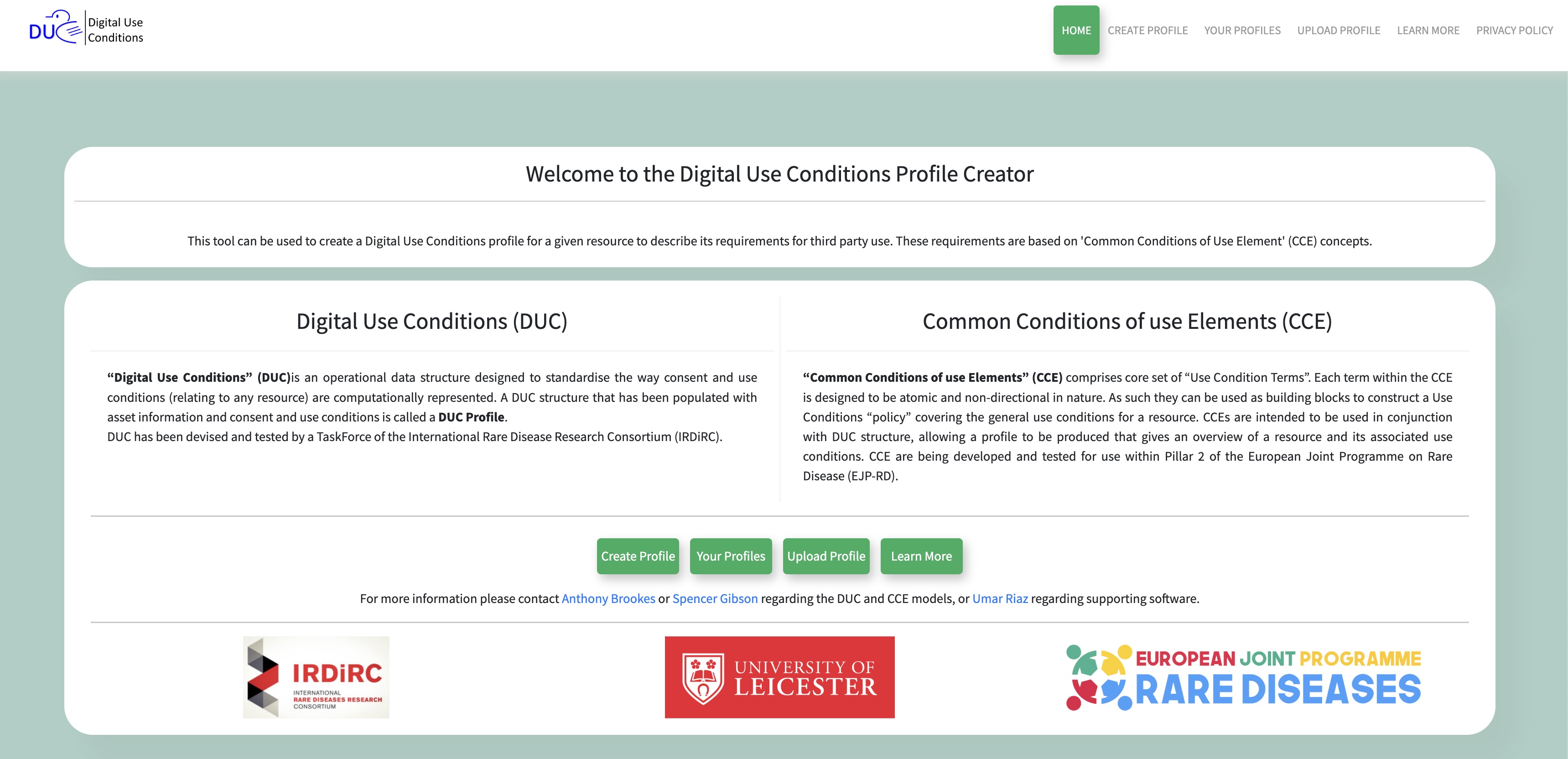
The Digital Use Conditions (DUC) approach provides a structured way to express permissions,
obligations and restrictions around research data. Profiles describe resources and the conditions under which they
may be used. Background and overview:
About DUC (PDF).
Extensions built on this foundation:
- DUCEPND — adapted for the European Platform for Neurodegenerative Diseases (EPND) to capture and expose cohort, dataset and biosample metadata relevant to neurodegeneration research.
- DUCEJPRD — tailored for the European Joint Programme on Rare Diseases, incorporating the CCE vocabulary to make complex use conditions clear and consistent. CCE context:
CCE explanations (PDF).
My Role
As the sole developer, I owned planning, architecture, schema design, backend and frontend development,
database design, security, deployment and ongoing refinement. I worked closely with domain experts to ensure the
platform reflected real data-governance needs while remaining straightforward to use.
Key Features and Contributions
- Schema and Metadata Model — implemented the DUC conceptual model in a practical database-backed schema, including condition term, rule, scope and parameter structures.
- CCE Integration — incorporated Common Conditions of Use Elements to break down complex policies into usable, non-directional building blocks for DUCEJPRD.
- Profile Creation Flows — built guided interfaces to help curators compose, validate and preview DUC profiles, with export options for downstream use.
- Search and Discovery — delivered filtering and browsing tools so researchers can quickly understand conditions before requesting access.
- Security and Governance — added role-based access, auditability and validation to support responsible data stewardship.
- Domain Extensions — extended the DUC core for DUCEPND and DUCEJPRD with fields and UI patterns specific to neurodegeneration and rare disease consortia.
- Publication Support — contributed the technical implementation referenced in the associated peer-reviewed research, aligning software behaviour with published methodology.
Impact
- Made abstract consent and use conditions actionable through a clear, machine-readable platform.
- Enabled EPND and rare disease stakeholders to catalogue resources with transparent, consistent conditions.
- Improved discoverability and trust by showing researchers exactly how data may be used.
- Aligned with FAIR principles, supporting interoperability across projects and infrastructures.
Technology Stack
PHP, CodeIgniter 4, JavaScript, HTML, CSS, Bootstrap, MySQL.