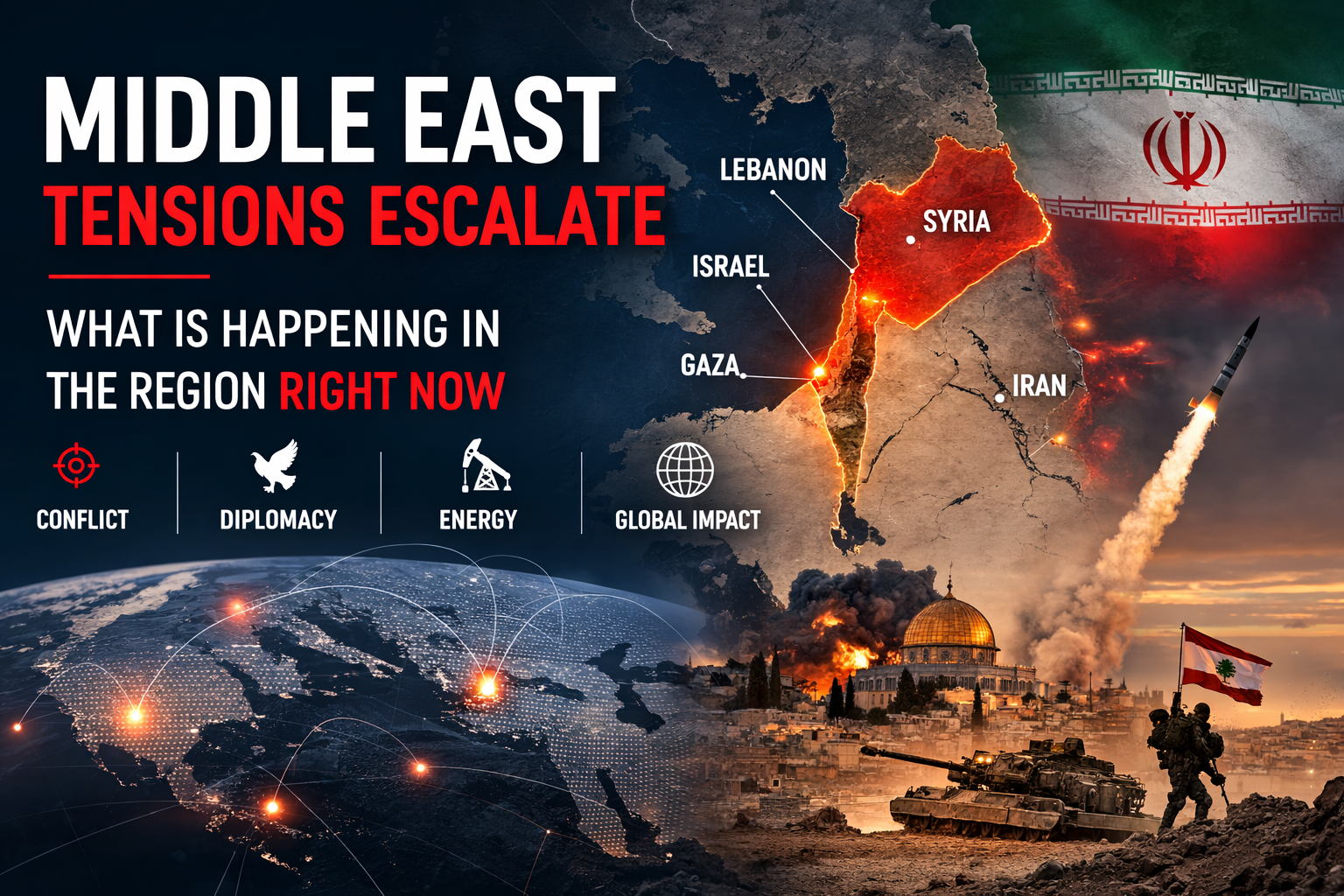
Middle East Tensions Escalate: What Is Happening in the Region Right Now
The situation in the Middle East remains complex and highly sensitive. Several ongoing conflicts, political rivalries and military developments continue to shape the region. Governments, international organisations and global markets are closely watching events because instability in the Middle East often affects energy prices, international security and diplomatic relations around the world.
Why the Middle East Is Under Global Attention
The Middle East sits at the centre of global geopolitics. Major shipping routes, oil supplies and regional alliances make developments in this area important for many countries. In recent months tensions have risen due to military activity, political disagreements and humanitarian concerns in several locations across the region.
Countries including Israel, Iran, Lebanon, Syria and neighbouring states remain central to the current developments. Diplomatic talks are ongoing while military readiness remains high across several borders.
Conflict Zones and Security Concerns
Several areas in the Middle East continue to experience security challenges. These include border tensions, missile activity, and ongoing military operations. Governments across the region have increased defence preparedness while international organisations call for calm and negotiation.
Civilian safety remains a major concern. Humanitarian organisations are working to provide support to affected communities while international leaders encourage diplomatic solutions to reduce escalation.
Impact on Global Politics and Economy
Instability in the Middle East often affects the wider global economy. Energy markets respond quickly to developments in the region because several major oil producers operate there. Any disruption to supply routes can influence fuel prices and financial markets.
Governments in Europe, Asia and North America are monitoring the situation carefully. Diplomatic missions continue to engage with regional partners in an effort to prevent further escalation.
Diplomatic Efforts and International Response
Many countries are actively involved in diplomatic discussions aimed at reducing tensions. International organisations and regional alliances are encouraging dialogue between parties involved in the conflict.
Peace negotiations, ceasefire discussions and humanitarian agreements remain part of the ongoing efforts to stabilise the region.
Why the Situation Matters for the World
The Middle East remains strategically important for global trade, energy supply and security cooperation. Any changes in stability can have ripple effects across international politics and economic markets.
For the general public and policymakers alike, understanding developments in the Middle East helps explain shifts in global news, economic trends and international diplomacy.
Looking Ahead
The coming months will be crucial for determining whether tensions ease or escalate further. Diplomatic negotiations, regional cooperation and international pressure will likely play a key role in shaping the next phase of events.
While uncertainty remains, continued dialogue and international engagement offer hope that long term stability can eventually be achieved.