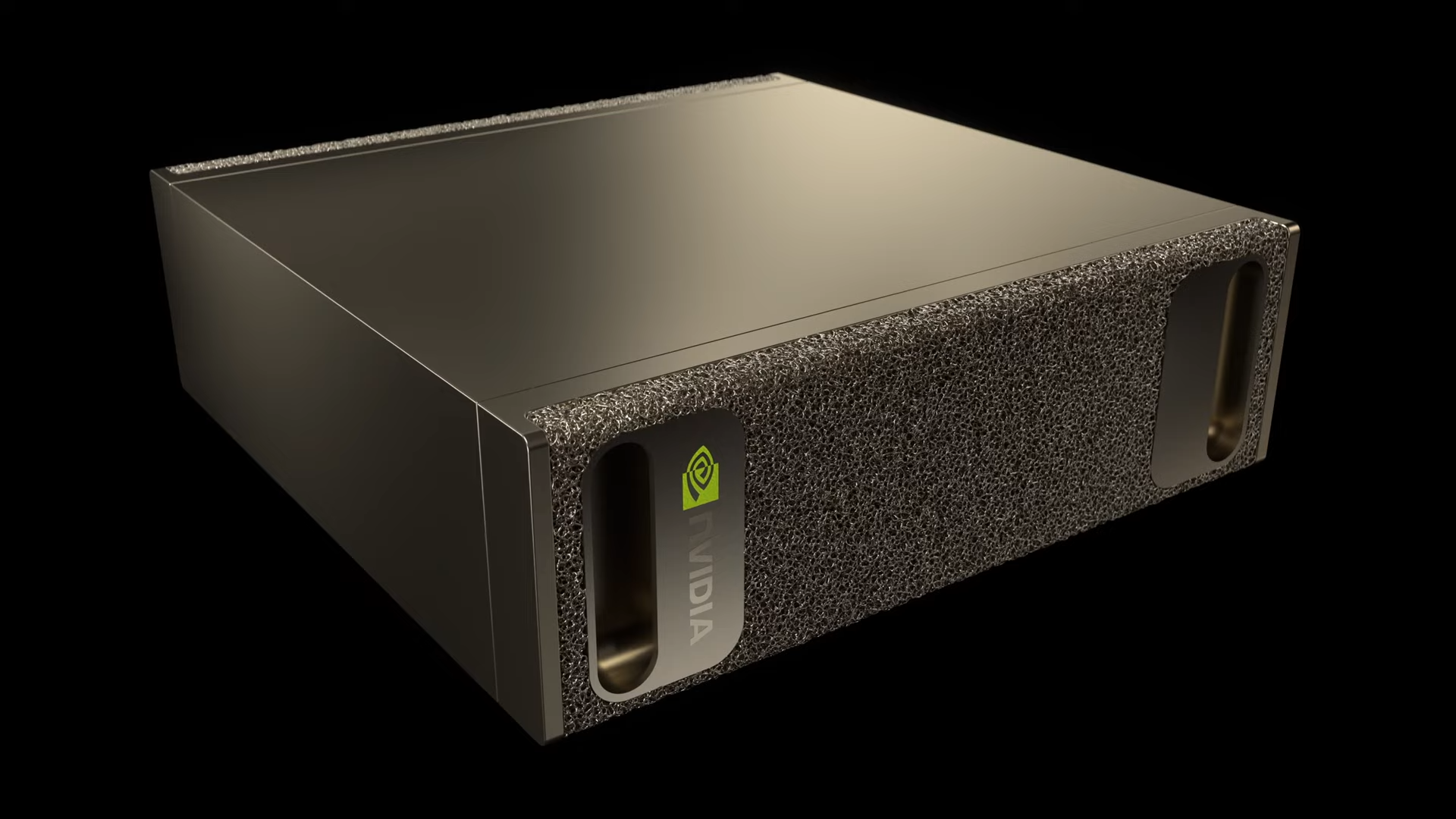
The Supercomputer on Your Desk: NVIDIA DGX Spark and the New Shape of AI Power
Once, supercomputers filled entire rooms. Now, NVIDIA’s DGX Spark promises to sit quietly on a desk, delivering powerful AI performance for researchers, creators, and developers. It shows how the future of artificial intelligence might soon fit neatly beside your coffee cup.
From data centres to desktops
For decades, the word supercomputer made people think of huge machines hidden away in temperature-controlled rooms. Power was something remote, expensive, and far beyond the reach of most people. That idea has now changed with NVIDIA’s DGX Spark, a powerful AI computer small enough to fit on your desk.
The DGX Spark is powered by NVIDIA’s new GB10 Grace Blackwell Superchip. It combines a central processor (CPU) and a graphics processor (GPU) into one unit. Together, they share memory and deliver up to one petaflop of performance. That is the kind of power that once needed an entire server rack.
Power for everyday innovation
Spark brings artificial intelligence to places where people actually create things. Instead of relying on expensive cloud computing or waiting for access to shared hardware, teams can now develop and test AI models locally. The system can run large language models, fine-tune existing ones, and handle machine learning tasks quickly and securely.
For small research groups, design studios, or universities, this means faster results and lower costs. Sensitive data can stay in-house, and creative ideas can be tested straight away. The DGX Spark helps turn artificial intelligence from something distant into something practical and personal.
A compact tool with real power
The DGX Spark may be small, but it is built for serious work. It is ideal for AI developers, researchers, robotics engineers, and creators who need high performance without the complexity of large data centres. It runs efficiently, keeps data local, and supports everyday machine learning projects.
However, Spark is not designed to train massive AI models from scratch. It is made for tasks like testing, fine-tuning, and deploying models. This balance of power and simplicity makes it perfect for smaller teams and individuals who want to explore AI without huge budgets.
Why the DGX Spark matters
This new approach to computing gives more people access to serious technology. Students, start-ups, and small labs can now run AI projects on their own terms. When tools like this are easier to use and more affordable, innovation spreads faster. More people can take part in the growing AI revolution.
The DGX Spark also improves privacy and control. Because data does not have to leave the local network, companies can develop AI safely and protect their information. It is a clear step towards a future where every team, not just large corporations, can use powerful AI tools.
Accessible AI for everyone
NVIDIA plans to offer the DGX Spark through partners such as Dell, HP, Lenovo, and ASUS. It is expected to be priced around four thousand pounds, which makes it a professional investment rather than a luxury. For many organisations, it will be a cost-effective alternative to constant cloud computing fees.
The design is also symbolic. NVIDIA once delivered its first DGX supercomputer to OpenAI, starting a new era of artificial intelligence. Now, the DGX Spark brings that same ambition to a smaller, more personal scale. It shows how far technology has come – from massive server rooms to the everyday workspace.
The quiet future of computing
The DGX Spark is more than a new gadget. It represents a shift in how we think about power and progress. True innovation often starts small and quiet. This compact machine sits calmly on a desk, yet it has the ability to train models, generate content, and process data that once needed an entire building.
Supercomputers no longer belong only to governments or large corporations. With the DGX Spark, they can belong to anyone with curiosity and a plug socket. It is a reminder that the next wave of artificial intelligence will not arrive with noise and fanfare, but with a quiet hum beside your laptop.