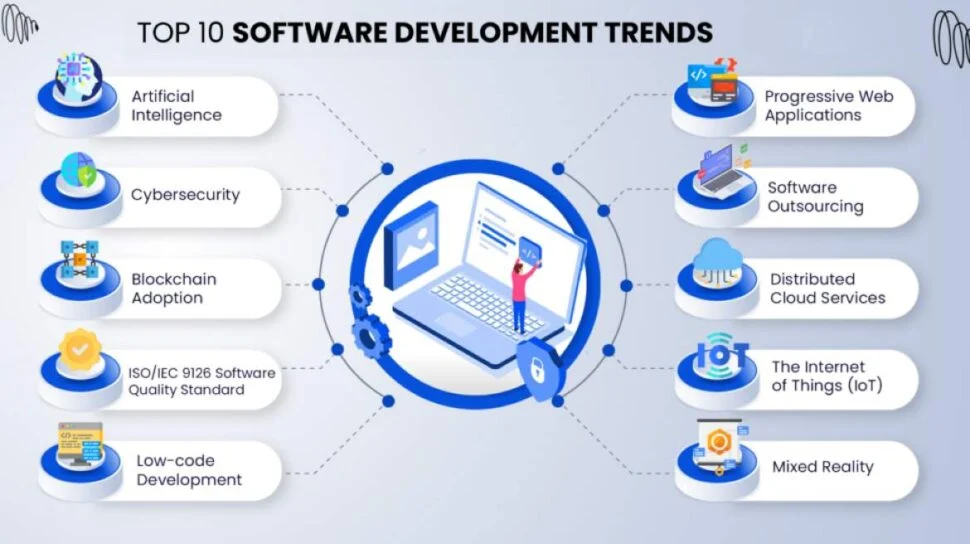
Top 10 Software Development Trends in 2025: What Every Developer and Business Should Know
As software development moves into 2025, the landscape is changing fast. From AI-powered coding to low-code platforms and sustainable engineering, these ten trends show where technology is heading and how you can stay ahead of the curve.
1. AI-Native Software Development
Artificial intelligence is no longer just a tool; it has become part of the development process itself. AI-assisted coding, automated testing and intelligent debugging are speeding up delivery while improving quality. Developers in 2025 are working alongside AI as creative partners rather than replacements.
2. Large Language Models and Intelligent Agents
Large language models (LLMs) are shaping the way software is built. Applications that include AI-driven chatbots, support agents and coding assistants are now mainstream. Development teams are learning how to integrate these models safely and responsibly into their systems.
3. Generative AI Platforms
Companies are building internal platforms to manage and deploy generative AI. These platforms let developers reuse components, monitor performance and apply consistent rules for privacy and ethics. In 2025, organisations that manage AI responsibly will gain a real competitive advantage.
4. Low-Code and No-Code Expansion
The demand for faster software delivery is driving the growth of low-code and no-code tools. These platforms allow non-technical users to create functional applications through visual interfaces. Developers, in turn, focus on integration, security and performance instead of building everything from scratch.
5. Edge Computing and the Internet of Things
With more connected devices and sensors, data processing is moving closer to where it is generated. Edge computing reduces latency and improves reliability. Developers must design systems that work seamlessly across cloud, edge and on-device environments.
6. DevSecOps and Built-In Security
Security is now a shared responsibility across development teams. DevSecOps combines development, security and operations from the very start of a project. Automated vulnerability checks and AI-based monitoring tools help reduce risks and ensure compliance with new regulations.
7. Evolving Developer Roles and Talent Density
The most successful teams in 2025 are smaller but more skilled. Developers are moving beyond pure coding to roles that combine design, automation and strategy. Collaboration skills, creativity and adaptability matter as much as technical knowledge.
8. Sustainable and Responsible Software Engineering
Software sustainability is becoming a serious goal. Teams are focusing on reducing the energy impact of cloud services, creating efficient algorithms and applying ethical standards to data use. Customers and regulators alike are demanding greener and more transparent software practices.
9. Cloud-Native and Modular Architectures
Cloud-native systems are the backbone of modern software. In 2025, developers are designing applications with microservices, APIs and containers to ensure flexibility. Modular design also means teams can update parts of an application without disrupting the whole system.
10. Developer Experience and Smart Metrics
Developer experience (DX) has become a key measure of success. Clear documentation, fast feedback loops and effective AI tools help teams deliver better software more quickly. Data-driven insights now track performance, code quality and productivity in real time.
What This Means for You
The message for 2025 is simple: stay adaptable. Developers and businesses that embrace automation, AI and sustainability will lead the way. Focus on secure, modular design; measure progress with clear metrics; and keep learning as technology evolves. The best software in 2025 will come from teams that combine innovation with responsibility.
Final Thoughts
The future of software development is intelligent, collaborative and human-centred. Artificial intelligence may write some of the code, but creativity, curiosity and problem-solving remain at the heart of progress. By following these ten trends, you can build technology that is faster, safer and ready for whatever comes next.